
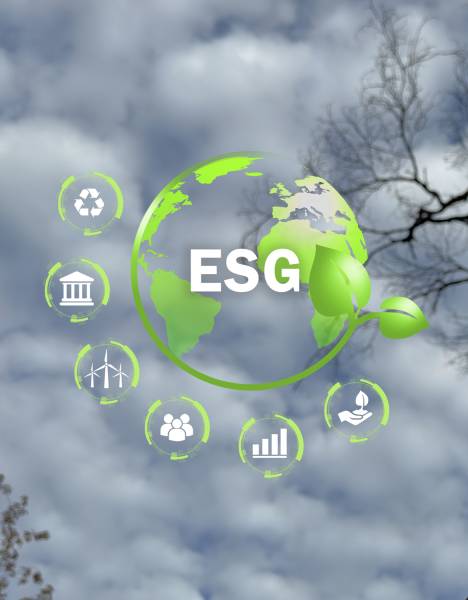




Reporting on environmental performance, social responsibility and corporate governance.
Today, environmental sustainability and socially responsible behaviour are increasingly becoming key to a better future for all of us, while implementing ESG principles and establishing sustainable business practices is becoming almost imperative for companies.
is the process by which a company prepares and publishes information on its impact on the environment (Environmental), society (Social), and the way it manages the organisation (Governance).
ESG reporting includes qualitative disclosures relating to these three elements, as well as quantitative measurements and comparisons of the company’s performance with previously defined ESG risks, opportunities and strategies.
Preparing an ESG report can often be challenging, as companies must first determine how they will measure and communicate ESG information and which indicators they will use.
element covers a wide range of topics such as climate change, use of natural resources, environmental pollution, waste management including electronic waste, CO2 emissions, opportunities to use and invest in clean technology, renewable and green energy, etc.
element covers topics such as human resources, occupational health and safety, human resource development, product safety and quality, privacy and data protection, responsible investment, the supply chain, socially responsible behaviour, opportunities for access to financing and healthcare, etc
element covers topics such as business ethics and culture, ownership structure, directors' remuneration, board diversity in terms of age, gender, education and professional experience, anti-monopoly practices, corruption and bribery, and tax and accounting transparency, etc.
Our consultants can help you align and implement ESG principles in your company through: